Ranting and Revving
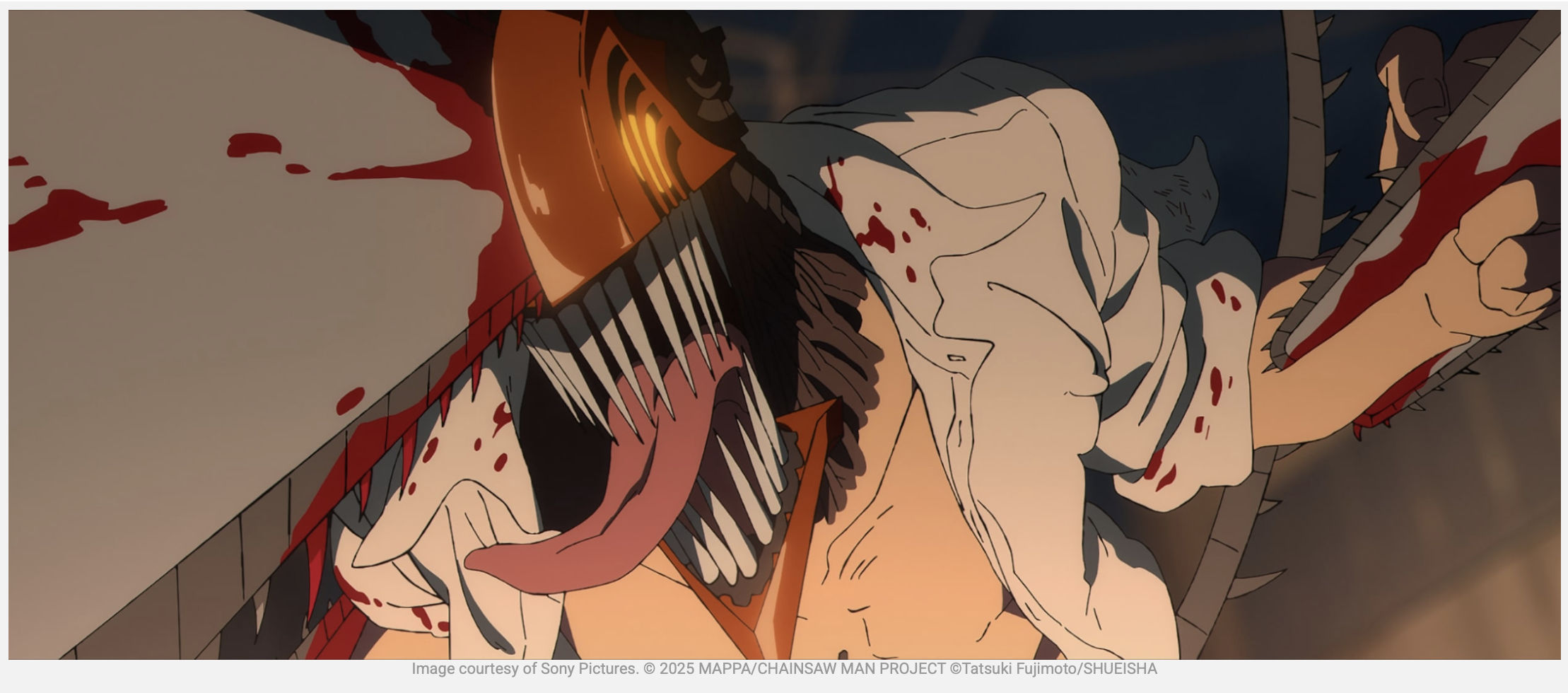
A little more than a year after the Chainsaw Man anime’s debut in the fall of 2022, the production of Chainsaw Man – The Movie: Reze Arch was announced. In an industry whose fans have become accustomed to cancelations, the anime community was elated. Again, in 2024, the second announcement finally revealed the production staff, with Tatsuya Yoshihara as the director.
Tatsuya Yoshihara, known mostly for his role as director of the anime series Black Clover, is heralded in the anime community as a great talent who was dealt a short hand and a long road. Distress in Black Clover’s animation quality has been speculated by fans as being due to budget cuts and staffing shortages, resulting in what many believe to be an inaccurate representation of Yoshihara’s talent. Chainsaw Man – The Movie: Reze Arch signifies, for many, the first opportunity he has had to show his directorial acumen free of substantial budgeting or staffing issues. Yoshihara worked on Black Clover with a number of staff members involved in the Chainsaw Man television show and movie, including Takahito Sakazume, Shun Enokido, and Hideki Hamazaki, marking this as the long-awaited opportunity to create the high caliber of work previously impossible to the team.
Almost 51 years to the day that Texas Chainsaw Massacre – a widely credited inspiration for Chainsaw Man – was released, fans are finally able to see their hero Denji and his bombastic romance with Reze. Nearly two months after its debut, Chainsaw Man still fills theaters, as studio MAPPA’s $4M investment grosses over $160M worldwide (and counting). Compared to Demon Slayer: Kimetsu no Yaiba – The Movie: Infinity Castle, another A-list anime movie released earlier this year, which had a $20M budget and grossed $500M worldwide, Chainsaw Man has seen a more than 40x ROI compared to Demon Slayer’s 25x.
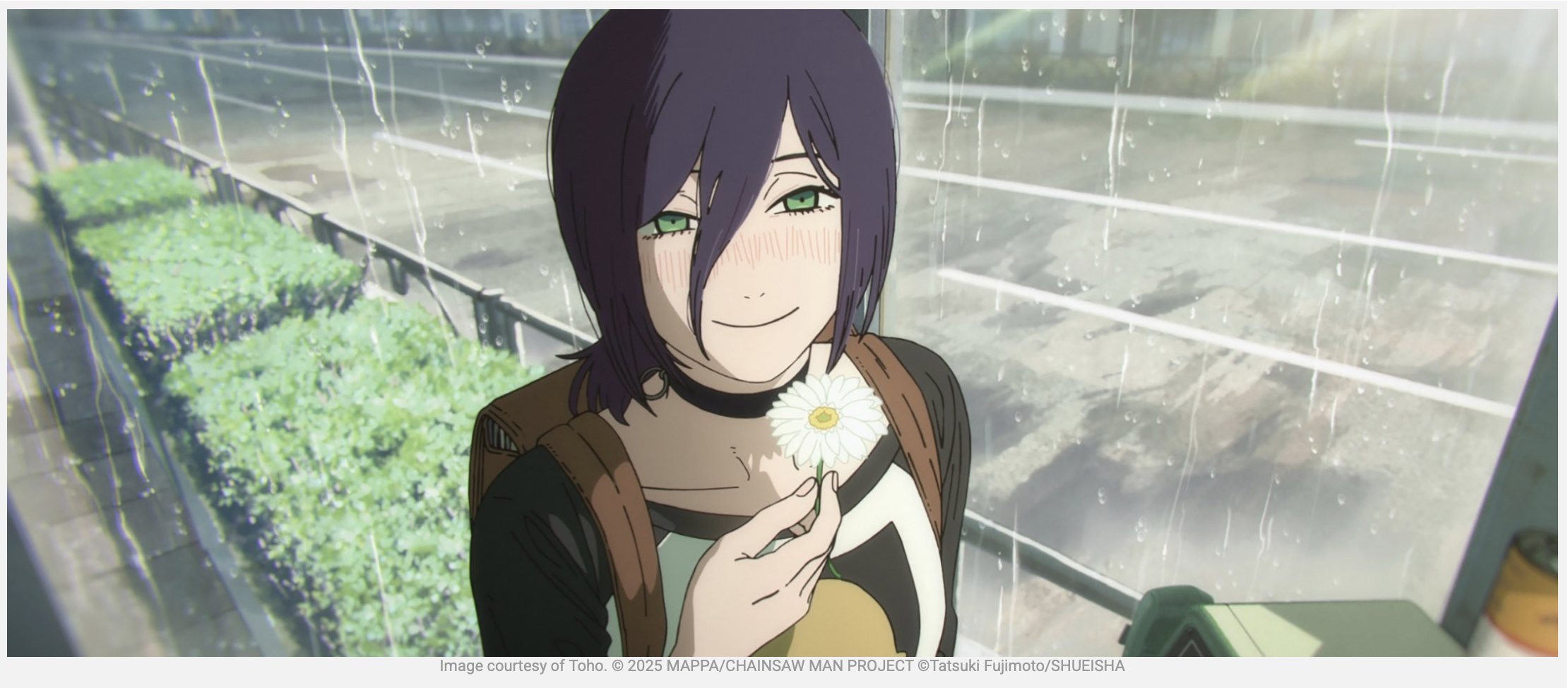
Visually, Chainsaw Man has always been hyper selective of when and where to exercise the most attention to detail. In the manga, excessive attention was rightfully placed on the action, the macabre, and moments of tense importance, whereas most other mundane, plot propellant frames fell into an adored, yet comparatively, rudimentary, stylistic category. The tv show had a slightly opposite approach, with much of the jaw dropping detail placed on the interstitial, ponderous, and few-frames-friendly scenes, at the expense of the action sequences jumping stylistically to a less defined (budget friendly) 3d format. The movie, however, is able to make its moments of stylistic diversity seem less of a weighted qualitative decision of successes against sacrifices and seem more of a calculated decision to embrace variety as a captivating mode of storytelling. Traditional, American cartoon, even watercolor, mark some of the styles implemented. There is a palpable sense of vindication embedded in the animation.
Perhaps one of the most noticeable differences in the movie is the pacing. A tender sense of leisure is apparent throughout, as the world and its metaphors breath in a way inaccessible in either manga or television. It’s impossible to cinematically replicate the privilege a reader has to pause and ruminate on any given panel, just as it's logistically impractical to spend too long idle in a 24-minute episode. Many times, the movie can access that sweet spot of making its point with the full scope and breadth it deserves while capturing the tragic necessity to trudge forward as time and circumstances dictate action. However, the occasional instance of an unsubstantial repetition or incessant action sequence dangerously teetered the line between pandering and smothering, making a relatively short movie (100 minutes) feel drawn out at times.
A faithful adaptation of the source material is the base requisite for any adaptation. What defines that faith is the graceful capture of tone and aesthetics, along with the respectful acknowledgement of an audience's razor thin lenience towards, yet staunch expectation of, some form of deviation done “right.” That being said, Chainsaw Man – The Movie: Reze Arch is a faithful adaptation of both the manga and the television show. From the strict adherence to the source material's plot, to the stylistically adjacent aura throughout, in more ways than not, the movie does not climb to the accolades of its predecessors but meets them on equal footing, enriching the entire mythos.
